
To grow soursop (Annona muricata) fruit trees at a production level, specific requirements must be met to ensure healthy growth, high yields, and fruit quality. Below are the key requirements for cultivating soursop trees commercially:
1. Climate Requirements
- Temperature: Soursop trees thrive in warm, tropical climates. The ideal temperature range is 25–30°C (77–86°F). They are sensitive to cold and cannot tolerate frost or temperatures below 5°C (41°F).
- Humidity: High humidity is preferred, as soursop trees are native to tropical regions.
- Rainfall: They require 1,000–3,000 mm (39–118 inches) of annual rainfall, evenly distributed throughout the year. Drought conditions can negatively affect growth and fruit production.
2. Soil Requirements
- Soil Type: Soursop trees grow best in well-drained, fertile soils with a high organic matter content. Sandy loam or loamy soils are ideal.
- Soil pH: The optimal pH range is 5.5–6.5 (slightly acidic to neutral).
- Drainage: Poorly drained or waterlogged soils can lead to root rot, so proper drainage is essential.
3. Sunlight
- Soursop trees require full sunlight for optimal growth and fruit production. At least 6–8 hours of direct sunlight daily is recommended.
4. Watering
- Regular watering is essential, especially during dry periods. However, avoid overwatering, as soursop trees are susceptible to root rot.
- Drip irrigation or mulching can help maintain consistent soil moisture.
5. Spacing and Planting Density
- For commercial production, trees are typically spaced 4–6 meters (13–20 feet) apart to allow for proper canopy development and airflow.
- Planting density usually ranges from 100–150 trees per hectare, depending on the variety and management practices.
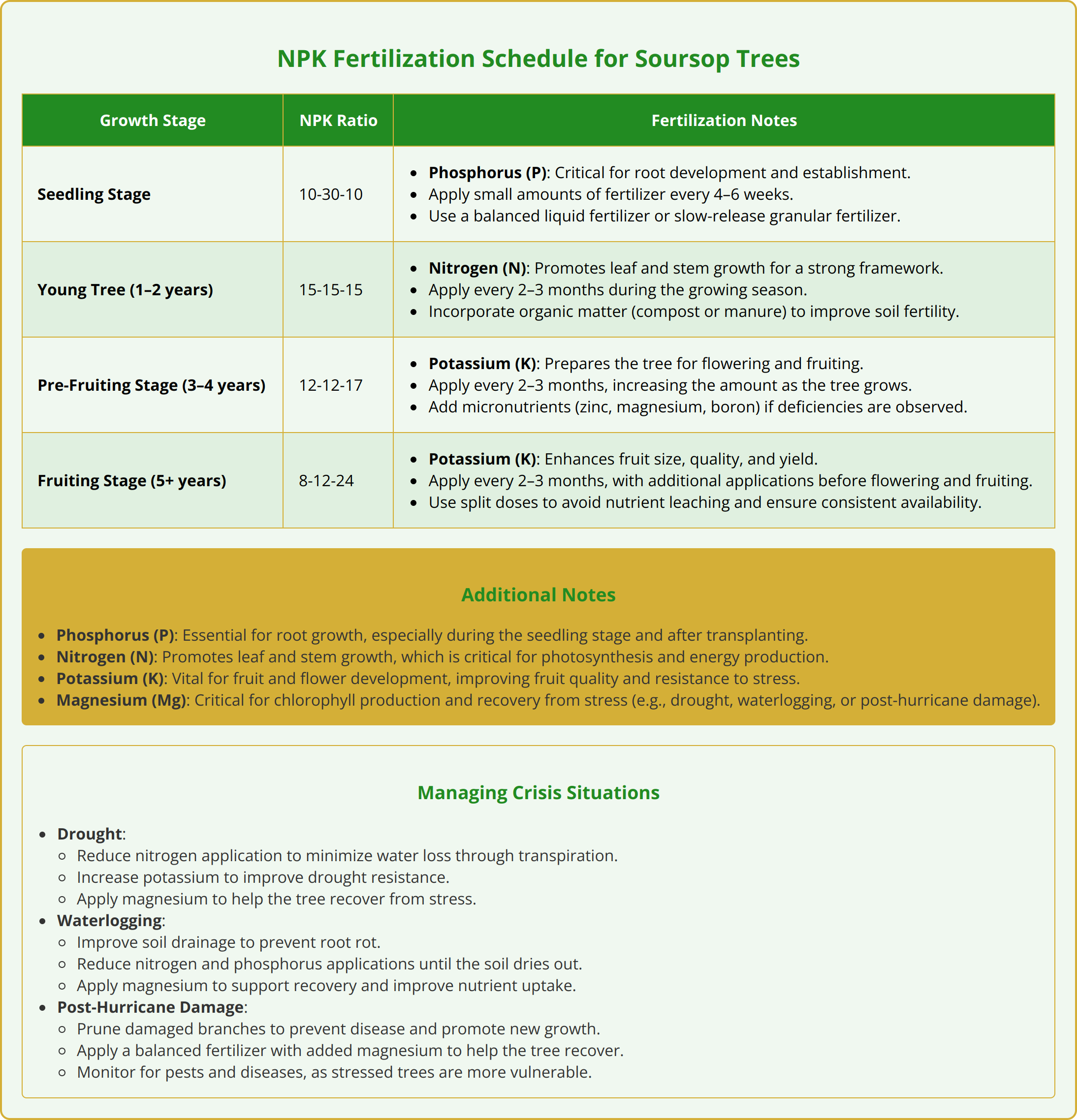
6. Fertilization
- Soursop trees require regular fertilization to support growth and fruit production. A balanced fertilizer with NPK (Nitrogen, Phosphorus, Potassium) is recommended.
- Apply fertilizers in split doses during the growing season, and incorporate organic matter (e.g., compost or manure) to improve soil fertility.
- Micronutrients like zinc, magnesium, and boron may also be necessary to prevent deficiencies.
7. Pruning and Training
- Regular pruning is necessary to maintain tree shape, improve airflow, and promote fruit production.
- Remove dead or diseased branches, and thin out crowded areas to allow sunlight penetration.
- Training young trees to a central leader or open canopy structure can improve yield and ease of harvesting.
8. Pest and Disease Management
- Common Pests: Fruit borers, mealybugs, scale insects, and aphids can affect soursop trees. Regular monitoring and integrated pest management (IPM) practices are essential.
- Common Diseases: Anthracnose, root rot, and fungal infections can occur. Proper sanitation, fungicides, and well-drained soils can help manage these issues.
9. Pollination
- Soursop flowers are naturally pollinated by beetles and other insects. However, hand pollination may be necessary in some cases to improve fruit set and yield.
10. Harvesting
- Soursop fruits are typically ready for harvest 4–6 months after flowering.
- Fruits should be harvested when they are fully mature but still firm. They will soften after harvesting.
- Handle fruits carefully to avoid bruising, as they are delicate and prone to damage.
11. Yield
- A mature soursop tree can produce 20–50 fruits per year, depending on growing conditions, tree health, and management practices.
- Yields increase as the tree matures, with peak production occurring between 5–7 years of age.
12. Post-Harvest Handling
- Soursop fruits have a short shelf life and should be stored at 12–15°C (54–59°F) with high relative humidity to extend freshness.
- Proper handling and storage are critical to prevent spoilage and maintain fruit quality.
By meeting these requirements, soursop trees can be grown successfully at a production level, ensuring high-quality fruit and sustainable yields.
NPK Fertilization Schedule for Soursop Trees
| Growth Stage | NPK Ratio | Fertilization Notes |
|---|---|---|
| Seedling Stage | 10-30-10 |
|
| Young Tree (1–2 years) | 15-15-15 |
|
| Pre-Fruiting Stage (3–4 years) | 12-12-17 |
|
| Fruiting Stage (5+ years) | 8-12-24 |
|
Additional Notes
- Seedling Stage: Focus on establishing a strong root system. Avoid over-fertilizing.
- Young Tree Stage: Promote vegetative growth to build a strong framework for future fruit production.
- Pre-Fruiting Stage: Prepare the tree for flowering and fruiting by increasing potassium levels.
- Fruiting Stage: Prioritize potassium to enhance fruit size, quality, and yield.